We love our rice. This fact is even more obvious after deliberating at COSTCO with my oldest daughter as to how many sacks of rice we should get. I said one will be enough, but she said, two because “we eat a lot of rice”, inviting chuckles from a nearby couple who overheard us and commented, “she knows”. Amused, I succumbed and ended up purchasing two bags of rice, trusting my daughter’s precise judgment.
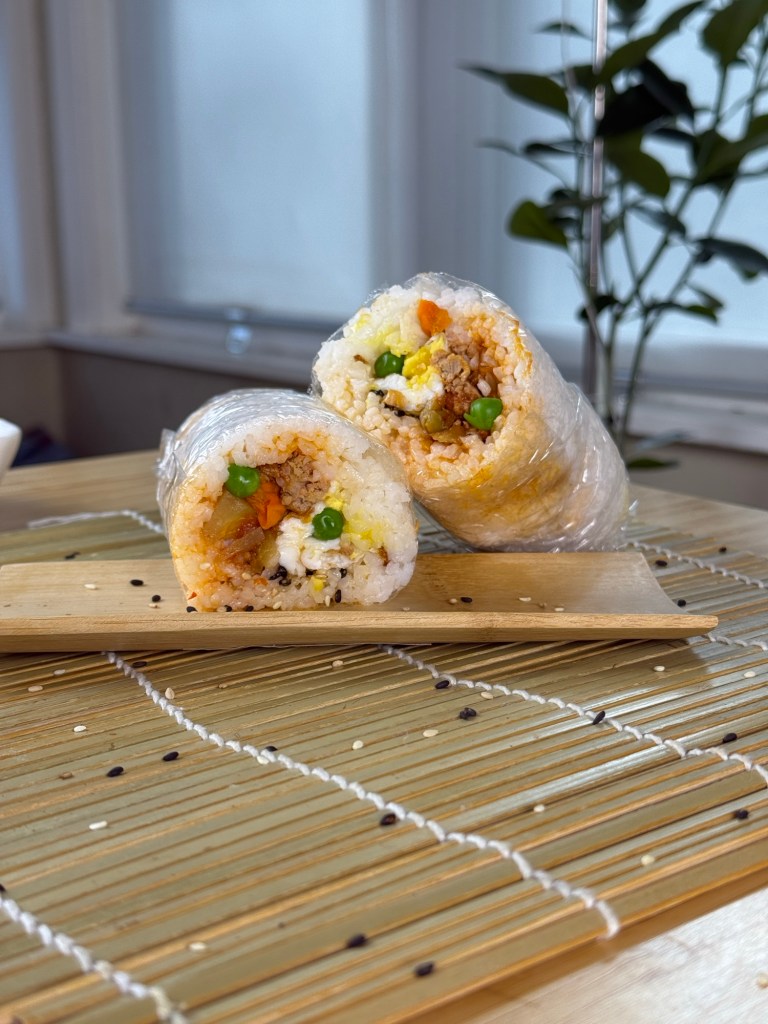
Fàntuán (饭团), literally, “rice balls”, is another type of rice roll we make for our on- the- go lifestyle that has joined the fray of sushi rolls, inari, onigiri, musubi, you name it. We take them to hikes, school, and road trips. Making them together also makes for a fun group activity. And of course, we make them because they are delicious and versatile.
There are a few places known for their fàntuán: Taiwan, Jiangnan and Shanghai being the most popular. There’s not a ton of variation to how they are traditionally prepared in the different areas, save for the omission of the fried egg. These are what you’ll find in a traditional fàntuán if you end up picking one apart: 油条(youtiao), or chinese “fried stick” which is not unlike a long donut sans any sweetness; 肉松 (rousong), or commonly known as pork sung or floss which is dried, shelf- stable, shredded pork that is subtly sweet; and 榨菜 (zhacai) or 咸菜 (xiancai) a couple of types of Chinese preserved vegetable, which can be either plain, which is naturally tangy or spicy (my favorite).
This spin on the traditional fàntuán is from a distant memory of my maternal grandmother serving a piping hot plate of giniling (Filipino picadillo) in front of each family member. A cup of rice is smothered in giniling, which is a mixture of ground meat, tomato sauces, and vegetables; then topped with a beautifully fried egg and served with a side of fried saging na saba, a Filipino cultivar of bananas similar to Thai bananas. It is absolutely comforting with a tropical vibe.
Giniling itself is not inherently sweet, so the sweetness that typically comes from the pork sung is derived from the fried banana, which also happens to be the “carb-on-carb” choice for this fàntuán. This type of banana is very different from your typical grocery store bananas, because they are more dense and higher in starch. They hold their shape well when roasted or fried, which is why it’s perfect for this recipe. The acidity of the preserved mustard cuts through the savory flavors of the giniling, bringing balance and familiarity to the dish as does the rest of the ingredients that you’ll normally find in a traditional version.
When I said the dish is versatile, I wasn’t kidding. You can serve it deconstructed to save you the time from rolling them OR if you end up making a meal out giniling and rice (which is typical in the Philippines), you can use whatever leftovers to make the fàntuán!
Giniling Fantuan

Serves: 8-10
Prep Time: 10 minutes
Cook Time: 30 minutes
Assembly Time: 30 minutes
Ingredients:
For the Giniling:
4 cloves garlic, minced
½ onion, minced
1 lb ground pork
½ bell pepper, red orange or yellow, minced
1 15 oz can tomato sauce
2 tbsp tomato paste
1 tbsp soy sauce
1 ½ tbsp fish sauce
½ tsp black pepper
175 g potatoes (approximately 0.40 lb), cut into small cubes
½ cup carrots, cut into small cubes
½ cup peas
For the rest:
Cooked sushi rice or glutinous rice, about one cup for each fan tuan
8-10 Thai Bananas, cut lengthwise and fried until golden
Pickled sour mustard greens 酸菜 (stems only) or mustard tuber 榨菜, roughly chopped
Toasted sesame seeds
8-10 eggs, sunny side up
Scallions, chopped
Pickled Chili/ 剁椒/ Duo Jiao, optional
Instructions:
To prepare the giniling, saute garlic until golden. Add onions and saute until translucent. Add pork and bell pepper, cooking all the way through. Add tomato sauce and tomato paste, soy sauce, fish sauce and black pepper. Stir to combine thoroughly before adding potatoes and carrots, covering the dish to cook for 10 minutes. When cooked through, add frozen peas and stir. Cook uncovered for another 5-10 minutes, until the sauce is thick. Set aside.
To assemble,
Lay a piece of plastic wrap on a sushi mat. Flatten rice on top of the wrap. Use water if needed to prevent the rice sticking to your fingers. Create a small furrow horizontally using your fingers. Fill this furrow with your giniling, then layer the rest of the ingredients: pickled chili (if you opt in), thai bananas, your choice of mustard greens or tubers, scallions, sesame seeds and finally, your egg. Starting from the end closest to you, gently pull up the mat and firmly fold over the ingredients. Your egg yolk will likely burst, which your rice will end up absorbing. Take the other end of the mat, and bring it towards you, firmly pushing to create a cylinder. Use the plastic wrap to tuck in the edges and seal the fantuan.*
NOTES:
I used this video to help me grasp the concept of wrapping a rice roll.
Check out my video to see how I roll the items in order.

 Hey It's Jen Lou