🌱✨ Savory, handheld, and perfect for sharing!
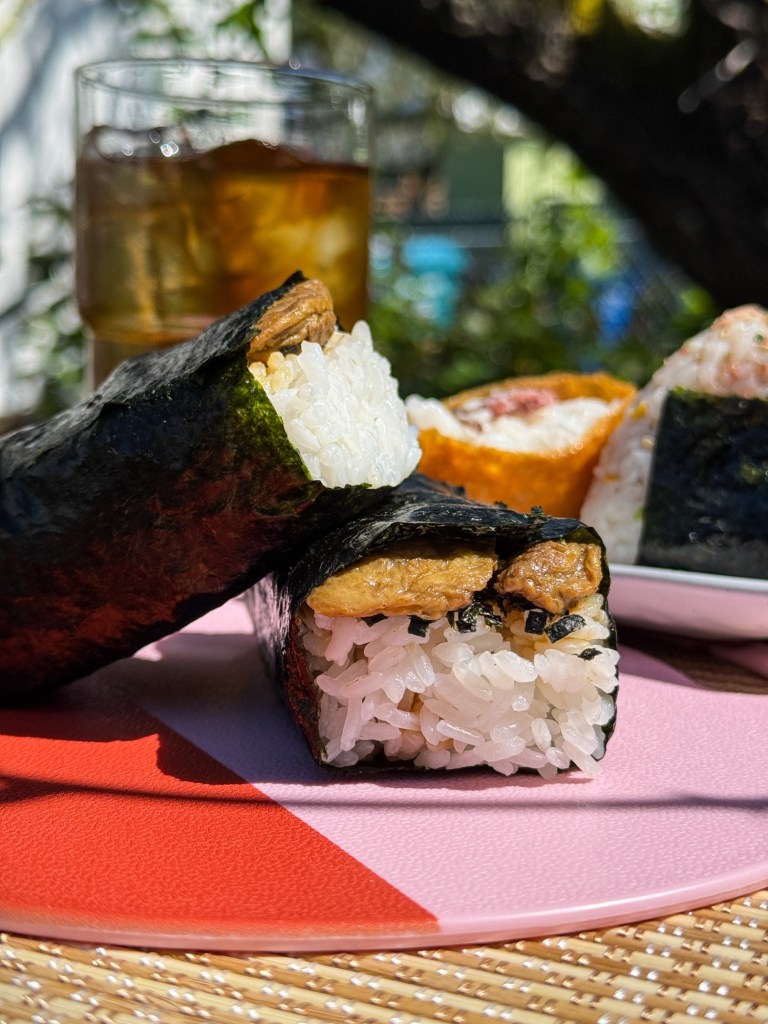
Picnics are kind of my thing—especially when they involve rice balls in all shapes and forms. For the past few years, I’ve been making an ever-rotating assortment inspired by this hanami-style picnic spread from Constellation Inspiration. These Vegan Curry Musubis are one of my go-tos: easy to prepare ahead, endlessly satisfying, and totally plant-based.
This year, I made them for a springtime adventure when my sister-in-law came to visit. We packed up a little feast of Japanese-inspired rice balls (this curry version included!), a bottle of Hojicha Yuzu Palmers, and fruit sandos to refresh and finish. We picnicked under the trees, the kids ran wild by the water, and everything tasted just right in the sun.
Inspired by the classic Spam Musubi, this vegan twist features curry-braised gluten—a pantry favorite in many Asian households. The savory filling, combined with seasoned rice and nori, makes for a perfect bite on the go.
____________________________________________________________________________
🍙 Why You’ll Love This Recipe
- Totally vegan, with bold umami-packed flavors
- Easy to make ahead and customize
- Kid-friendly and super fun to assemble
- Brings nostalgic Japanese convenience store vibes into your kitchen
🧂 Ingredient Spotlight: Braised Gluten
This might be new territory for some of you! Braised gluten (a.k.a. “mock duck” or “vegetarian meat” in some circles) is often simmered in a savory-sweet soy-based sauce that soaks through the spongy, layered texture of wheat gluten. Once pan-fried, the pieces’ exterior crisp up beautifully, giving you that golden, chewy bite that pairs so well with fluffy rice and umami-rich furikake.
🍛 Ingredients
Makes: 12–16 musubis
Prep Time: 5 minutes
Cook Time: 45 minutes
Assembly Time: 30 minutes
- 1 can curry braised gluten
- 2 cups medium-grain rice (sushi rice)
- 3 ½ cups water
- 2 tbsp rice vinegar
- Oil for frying
- 1 pack nori sheets, cut lengthwise
- 1 pack or jar of furikake, any flavor (check ingredients, if you want to keep them vegan)
- 2–3 tbsp soy sauce
- Water for wrapping
🍱 Instructions
- Cook the Rice
Rinse and drain the rice. In a pot, cook it with 3 ½ cups water and the rice vinegar. Follow rice cooker instructions if you are using a rice cooker. Once cooked, let the rice cool for about 45 minutes—just until it’s warm and easy to handle. - Fry the Curry Gluten
While the rice cools, heat a little oil in a non-stick pan. Pan-fry the curry gluten until both sides are golden. Set aside. - Assemble the Musubis
- Lay a nori strip on a plate or board.
- Dip your fingers in water and lightly moisten the center of the nori where your musubi mold will go.
- Place your mold in the center. Fill it about ¾ of the way with rice, then press it down with the top of the mold.
- Brush the rice with soy sauce and sprinkle on some furikake.
- Add a layer of fried curry gluten.
- While using the top of the mold to gently keep the musubi in place, lift the outer mold frame to release your musubi.
- Wrap the ends of the nori around and seal with a dab of water.
- Repeat with remaining ingredients.
- Lay a nori strip on a plate or board.
- To Store or Serve
Wrap individual musubis in plastic wrap if not enjoying right away. These taste best the day they’re made, but they hold up well at room temp for a few hours — perfect for packed lunches or road trip snacks!
🔀 Variations
- Swap out the curry gluten with teriyaki tofu or grilled eggplant.
- Use brown rice or mixed grains for extra fiber.
- Add pickled veggies for some tang and crunch!
🛠 Equipment Needed
- Non-stick frying pan
- Musubi mold
- Small brush for soy sauce
- Rice cooker or pot with lid
💡 Pro Tips
- Wetting your fingers and mold makes handling sticky rice much easier.
- Use scissors to cut your nori evenly—this helps with clean folds.
- Pan-fry the gluten in batches to get a better sear!
📦 Storage Notes
Best eaten fresh or the day it is made. Not freezer-friendly.

 Hey It's Jen Lou