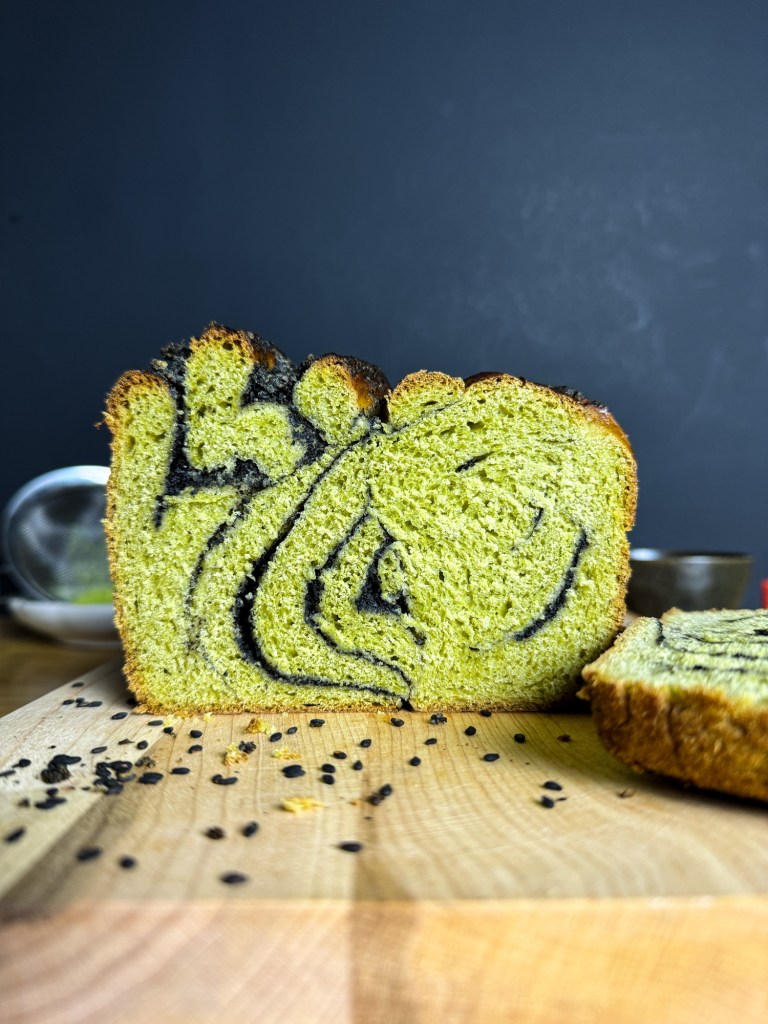
Texture contrast. Swirled. Seasonal.
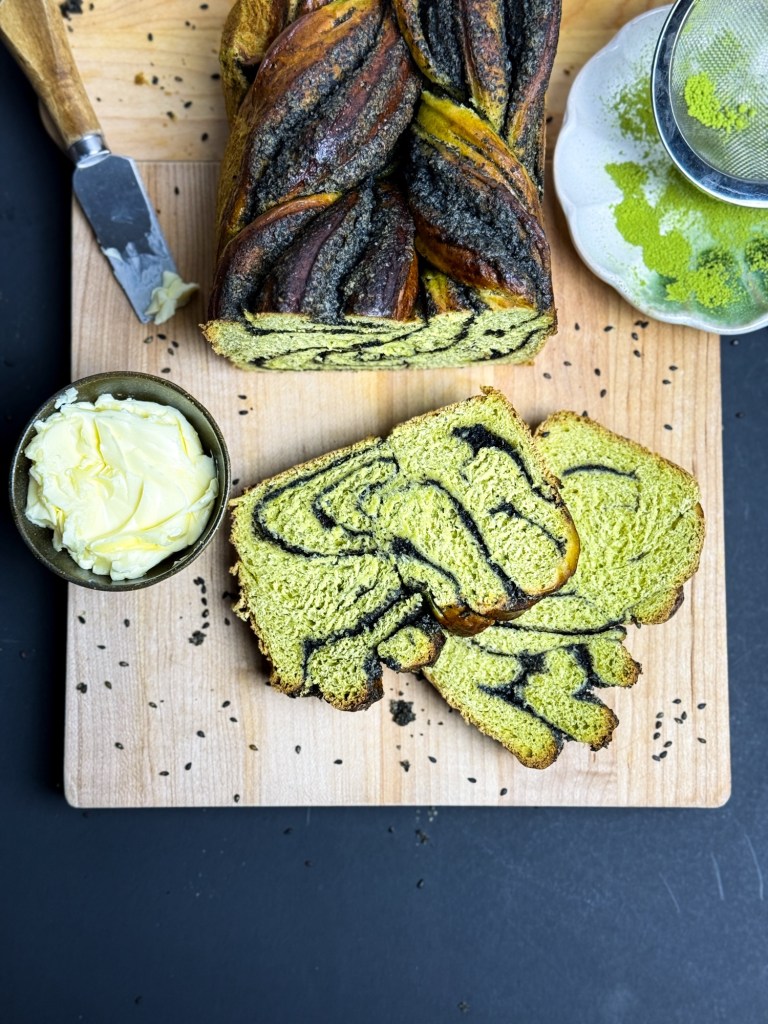
This Sweet Potato and Matcha Loaf with Black Sesame is this year’s spin on my annual Halloween loaf, bringing a celebration of color, contrast, and flavor. Last year’s version featured ube and black sesame for a bold purple-and-black pairing. This year, we’re turning to green and black: this yeasted bread is tinted naturally with matcha, while creamy satsuma-imo (Japanese sweet potato) adds tenderness, and the braided ribbons of nutty black sesame paste tops it with a satisfying crunch.
It’s a loaf that’s equal parts cozy and striking which makes it perfect for the fall table, for gifting, or for a quiet morning slice with tea.
Why You’ll Love This Recipe
Visually stunning: Matcha green and black sesame create a dramatic marbled loaf, perfect for Halloween or any fall gathering.
Naturally sweet: Satsuma-imo (Japanese sweet potato) adds subtle sweetness and a soft, custard-like crumb.
Aromatic & nutty: The black sesame swirl lends deep, earthy flavor and beautiful contrast.
Make-ahead friendly: The dough can be proofed overnight in the fridge for easy baking the next day.
Cultural fusion: A nod to Asian flavors in a familiar, comforting loaf form.
Equipment
- Mixing bowls
- Stand mixer or hand mixer (optional, for kneading)
- Rolling pin
- Loaf pan (9×5-inch)
- Parchment paper (optional)
- Kitchen Scale (for accuracy)
- Pastry brush (for egg wash)
Ingredients
For the Black Sesame Paste
- 1 cup black sesame powder (80 g)
- 5 tbsp sugar (70 g)
- ¼ cup butter (56.5 g, softened)
To make the black sesame paste:
Mix together black sesame powder, sugar, and butter until evenly combined.
For the Egg Wash
- 1 egg yolk
- 1 tbsp whole milk
Whisk together and set aside.
For the Loaf
- 2¼ tsp (1 packet/7 g) active dry yeast
- 1/2 cup warm water
- 1½ (6 g) tsp sugar
- 3 1/2 cup (400 g) bread flour
- ½ cup (110 g) white sugar
- 1 (5.5 g) tsp salt
- 4 tbsp (20 g) matcha powder
- 1/2 cup (100 g) satsuma-imo (Japanese sweet potato), roasted and mashed
- 1 large egg
- ⅓ cup (76 g) butter, softened
Instructions
- Activate the yeast
In a small bowl, whisk together yeast, warm water, and 1½ tsp sugar. Set aside for 5–10 minutes until foamy. - Mix the dry ingredients
In a mixing bowl, whisk together bread flour, white sugar, salt, and matcha. - Combine the dough
Pour the yeast mixture, mashed sweet potato, egg and softened butter into the flour mixture. Mix until combined, then knead for another 2 minutes using a mixer (10 minutes by hand) until a smooth dough forms. - First proof
Shape the dough into a ball and place in a greased bowl. Cover with a damp towel and let rise for 2–2½ hours, or until doubled in size. - Shape the loaf
Once risen, punch down the dough and transfer to a floured surface. Roll out into a large rectangle, even in thickness. Spread the prepared black sesame paste evenly over the dough surface. Starting from the short edge, roll the dough into a log. - Braid
Slice the log lengthwise into two equal strips. Pinch the ends together, then twist the two strips. Tuck the ends underneath and place the braid into a greased or parchment- lined loaf pan. - Final proof
Cover and let rise for another 30-45 minutes, until puffy. - Bake
Brush the top with the prepared egg wash. Bake at 350°F (175°C) for 35 minutes, or until the edges are golden brown. If the loaf begins browning too quickly, cover loosely with foil. - Cool and serve
Allow to completely cool before slicing. Enjoy as-is or lightly toasted with butter.
All About the Asian Potato
Across Asia, starchy roots like sweet potatoes, yams, and taro have long been essential ingredients in both sweet and savory cooking. Each variety brings its own unique flavor, color, and texture, from earthy and nutty to chestnut-sweet or floral.
Here are a few of the most beloved kinds you’ll find across Asian cuisines:
🧡 Satsuma-imo (Japanese Sweet Potato)
With reddish-purple skin and pale yellow flesh that deepens to gold when cooked, satsuma-imo is known for its dense, chestnut-like sweetness. It’s less watery than orange sweet potatoes, making it perfect for baking, tempura, or folding into doughs like this loaf, where its subtle sweetness and creamy texture shine.
💜 Okinawan Sweet Potato
Despite the name, this variety is actually native to the Philippines and spread through the Pacific via trade. Its beige skin hides a stunning violet interior that’s slightly drier and starchier than most sweet potatoes. It has a mellow sweetness with gentle floral notes which makes them great for mochi, pies, and ice cream.
💗 Murasaki Sweet Potato
Murasaki means “purple” in Japanese, though its flesh is cream-colored. This variety is lighter and fluffier in texture, with a nutty, caramel-like flavor when roasted. It’s often found in U.S. markets and works well as a substitute for satsuma-imo in recipes.
💛 Goguma (Korean Sweet Potato)
Similar to satsuma-imo but often even sweeter, goguma has smooth purple skin and pale yellow flesh that caramelizes beautifully. Koreans enjoy it roasted as a street snack, or blended into lattes, bread, and even pizza toppings.
💜 Ube (Purple Yam)
A true yam, not a sweet potato, ube has a vivid purple color and a sweet, almost vanilla-like aroma. Popular in Filipino desserts like ube halaya and ube pandesal, it has a creamier, moister texture than most sweet potatoes and is best used in sweets or enriched breads.
🤍 Taro (Dasheen, or Wu Tao)
Though not a sweet potato, taro is another beloved root across Asia. It’s characterized as mildly nutty with a silky, almost custardy texture when cooked. It’s used in congee, dim sum, and desserts like taro milk tea or mooncakes.
Each of these roots brings its own color story and personality to the table. For this Halloween loaf, satsuma-imo with its neutral color, mild sweetness, and soft crumb balances beautifully with matcha and black sesame, creating something both familiar and new.
Tips & Tricks
Proofing matters: Let the dough rise fully before baking to achieve a soft, airy texture.
Don’t overbake: The loaf should be golden on top but still tender inside.
Use room-temperature ingredients: They’ll help the dough mix evenly.
Prep ahead: The first proof can be done overnight in the fridge for a relaxed morning bake. Allow extra time the next day for proofed dough to go back to room temperature for ease in handling. Black sesame paste can be made up to one day in advance. Store at room temperature.
Storage
At room temperature: Store in an airtight container for up to 3 days.
In the fridge: Keeps up to 5 days. Warm briefly before serving.
In the freezer: Slice, wrap, and freeze for up to 1 month. Toast or warm to serve.
Behind the Recipe
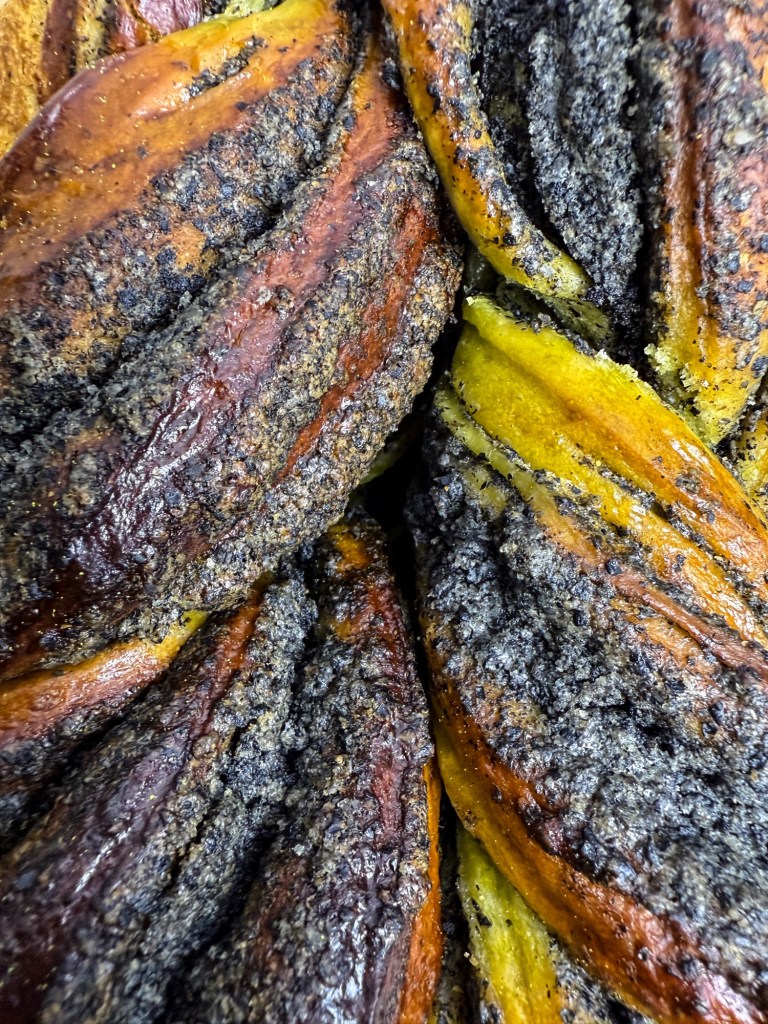
Every October, I bake a loaf inspired by the season. Each one blends comfort with a bit of the unexpected. Last year’s Black Sesame Crumb Ube Loaf was all about ease and bold color. This year’s version slows things down: a yeasted bread that celebrates texture, process, and transformation.
The deep green matcha and black sesame swirl together like something out of a forest- all that is grounding, fragrant, and just a touch mysterious. It’s a loaf that feels right at home in fall’s quiet magic.

 Hey It's Jen Lou