Soft. Fragrant. Heartfelt.
These Mini Pan de Muertos are a sweet, citrusy take on the traditional Mexican bread of remembrance. Each small bun is shaped with “bones” and a “skull” on top to honor loved ones who have passed.
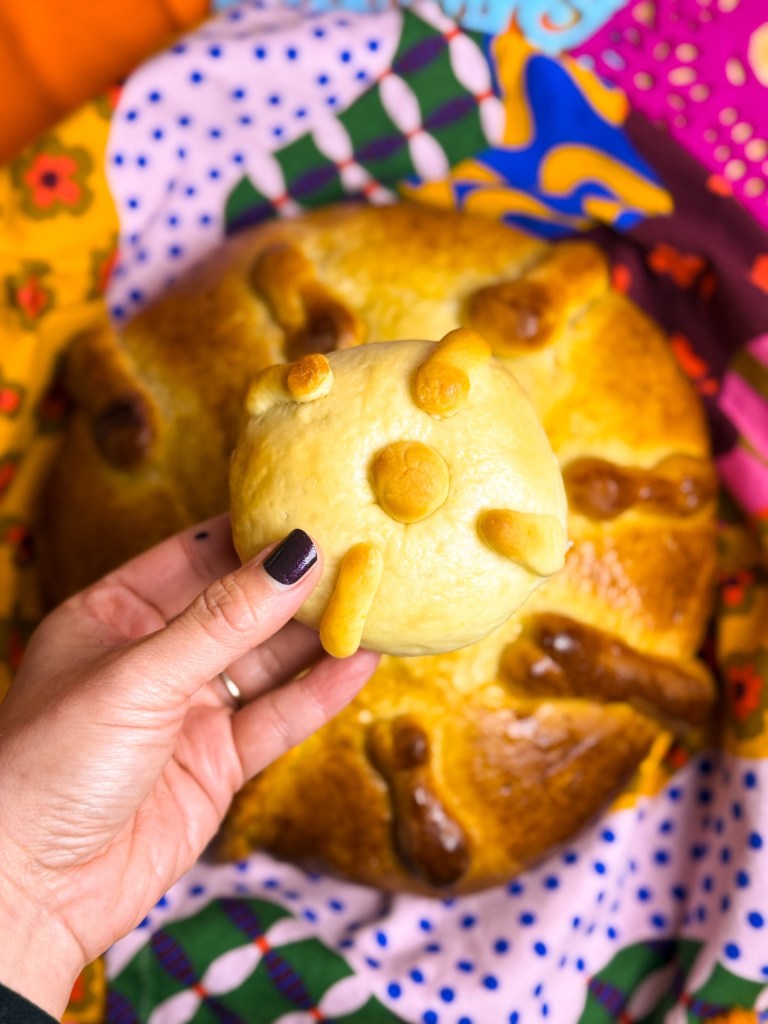
This year marks our family’s fourth year baking pan de muertos, and it’s become one of our most treasured traditions. Together, we made 48 mini loaves to share with classmates and friends, along with one large loaf for our family to cut into and share. Each October, my husband and I give classroom presentations to our girls’ school about Día de los Muertos, complete with crafts, stories, and these little breads that carry so much meaning.
This recipe is adapted from Dora’s Table, whose vegan version of Pan de Muerto is a wonderful resource for those looking for a plant-based take on this beloved bread.)
Why You’ll Love This Recipe
- Meaningful tradition: A hands-on way to celebrate love, memory, and connection.
- Soft & tender: Gold potato in the dough makes these buns extra pillowy.
- Bright & fragrant: Orange zest and juice bring a signature warmth and citrusy perfume.
- Perfectly shareable: Mini loaves are great for gifting or classroom celebrations.
- Family-tested: Simple enough for kids to help with, beautiful enough for any ofrenda or family table.
Equipment
- Stand mixer with dough hook (optional)
- Large mixing bowls
- Pastry brush
- Baking sheet
- Parchment paper
- Kitchen scale (for even portions)
Ingredients
For the Pan de Muerto
- 2¼ tsp (1 packet / 7 g) active dry yeast
- 1½ tsp (6 g) sugar
- ½ cup warm water
- 3¾ cups (500 g) bread flour
- ¾ cup (150 g) sugar
- 1 tsp salt
- 1 tsp orange zest
- ¼ cup orange juice
- 1/2 cup (100 g) gold potato, roasted and mashed
- ⅓ cup (76 g) butter, softened
- 1 egg
For the Egg Wash
- 1 egg yolk
- 1 tbsp whole milk
Instructions
- Bloom the yeast
In a bowl, combine active dry yeast, 1½ tsp sugar, and warm water. Whisk and set aside to bloom. - Mix the dry ingredients
In a mixing bowl, whisk together flour, ¾ cup sugar, salt, and orange zest. - Form the dough
Using a stand mixer fitted with a dough hook, add the yeast mixture, orange juice, mashed gold potato and egg to the dry ingredients. Slowly mix in the softened butter.
Once the dough comes together and no longer sticks to the sides, knead for another 2-3 minutes.
(If kneading by hand, this is roughly 10–15 minutes.) - First rise
Shape the dough into a ball, lightly oil a bowl, and place the dough inside. Cover with a damp towel and let rise for 2–2½ hours. - Shape the buns
Punch down the dough and divide into 13 equal pieces. Shape 12 into round buns using the pull-and-tuck method.
Use half of the 13th piece to create 12 small “skulls.” Gently press the tops of the buns to make an indentation, moisten with water, and place a skull on top. - Add the “bones”
Roll small strips of dough between your palms. Press the center slightly to flare out both ends to form a bone shape. Moisten one side and attach four “bones” to each bun in a cross pattern, with the skull at the center. - Second rise
Cover and let rise for another 1–1½ hours. - Bake
Preheat the oven to 350°F (175°C).
Whisk together egg yolk and milk for the egg wash. Brush the tops lightly and evenly.
(Tip: Avoid over-brushing to prevent uneven browning.)
Bake for 20–25 minutes, or until golden brown.
Cool completely before serving or storing.
About Día de los Muertos
Día de los Muertos (Day of the Dead) is celebrated on November 1st and 2nd throughout Mexico and by families of Mexican heritage around the world. It’s a vibrant, joyful holiday honoring loved ones who have passed. Despite the name, it’s not a day of mourning, but remembrance.
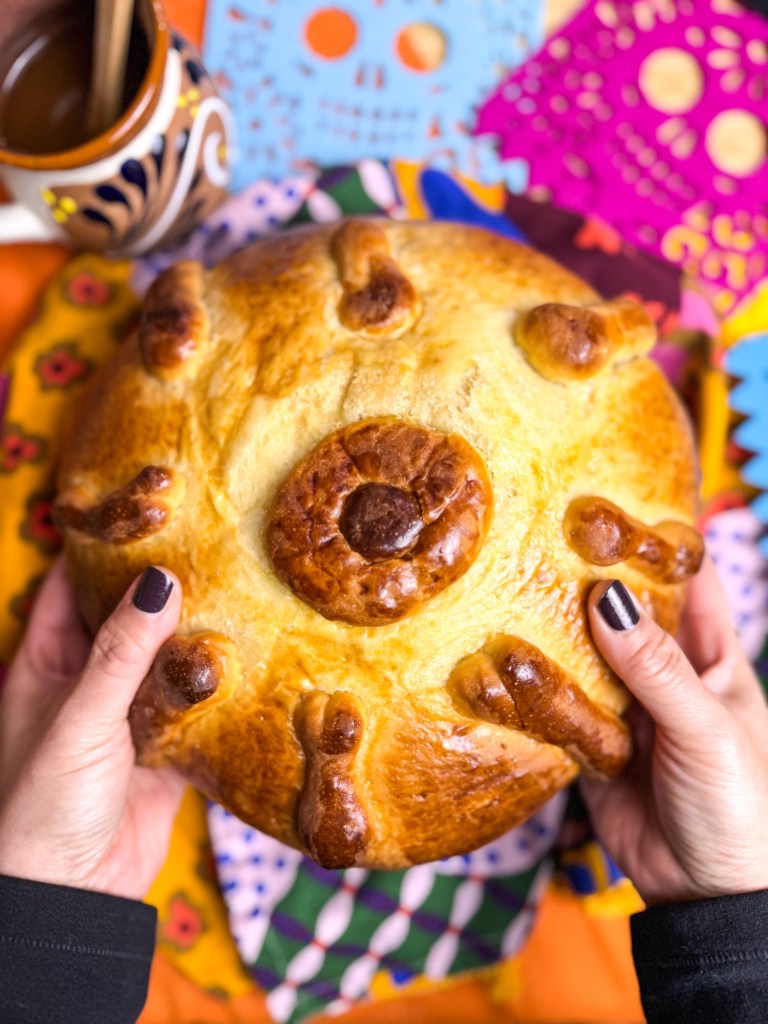
Altars (ofrendas) are adorned with candles, marigolds, photos, and offerings like pan de muerto, sugar skulls, tamales, and fruit. Families gather, share stories, and cook the foods their ancestors loved. It’s a reminder that love transcends time and space and their memory is another form of presence.
Tips & Tricks
- Use freshly mashed potato: it adds tenderness and keeps the bread soft.
- Don’t rush the proofing: This bread develops its best flavor and texture through slow rises.
- Citrus choice: Swap in tangerine or Meyer lemon zest for a slightly different aroma.
- Even browning: Rotate the baking sheet halfway through for a consistent golden color.
- Kids can help: Little hands are perfect for shaping the skulls and bones!
Variations
- Vegan version: Try Dora’s Table’s vegan pan de muerto for a dairy-free adaptation.
- Anise twist: Add ½ tsp anise seeds or extract for a more traditional flavor.
- Sweet topping: Brush warm buns with melted butter and sprinkle with sugar post-baking to make them traditional.
- Filled pan de muerto: Add your choice of dark, milk or white chocolate chips inside each bun before baking.
Storage & Make Ahead
- Room temperature: Store in an airtight container for up to 3 days.
- Freezer-friendly: Freeze baked buns up to 2 months. Reheat in a 300°F oven for 10 minutes.
- Make ahead: The dough can be made the night before and left to rise in the refrigerator overnight; bring to room temperature before shaping.
Pairings
- To drink: Enjoy with atole, champurrado, or a simple café de olla.
- To serve: Slice with butter and marmalade, or dip into Mexican hot chocolate.
- For the table: Pair with seasonal fruits like persimmons or oranges for a bright fall spread.
Behind the Recipe
Each loaf we bake reminds us of how traditions evolve across generations and continents. In our home, pan de muerto has become a bridge that connects our roots to the present and honors loved ones who are no longer with us. We teach our girls that remembrance can be beautiful, joyful, and sweet with every bone that’s shaped and carefully placed on each bun.

 Hey It's Jen Lou