If you’ve followed me for a while, you know my kiddo is allergic to peanuts. This means I’ve spent years hunting for a substitute that captures that roasty, peanut-y flavor without using any nuts at all. After a lot of buying, taste testing (and several “this is close but not quite” moments), I finally tried making my own combo and landed on something that tastes rich, nutty, toasty, and unbelievably satisfying:
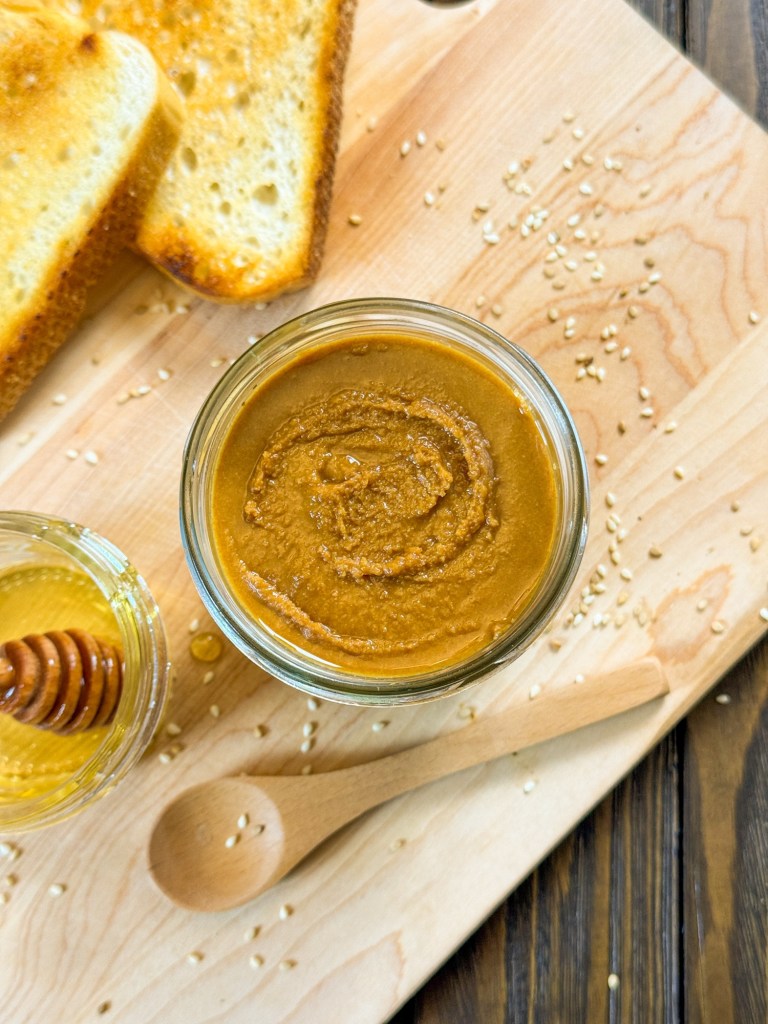
Kinako + zhimajiang (芝麻酱) = the peanut-adjacent spread of my dreams.
This Kinako Sesame Butter mixes Japanese roasted soybean powder with toasted Chinese sesame paste, creating a deeply fragrant spread you can use anywhere you’d normally use peanut butter. And the best part? It comes together in 10 minutes.
❤️ Why You’ll Love This Recipe
- Nut-free but deeply nutty tasting: the roasted kinako + sesame combo hits all the right notes
- Just 3 ingredients
- No blender, no fuss: just stir
- Customize the thickness (runnier or thicker)
- Keeps beautifully at room temp
- Incredible on both sweet and savory dishes
Difference Between Zhimajiang and Tahini
Though both are sesame pastes, they behave and taste very differently. Swapping one for the other completely changes the final flavor.
Zhimajiang 芝麻酱 (Chinese toasted sesame paste)
- Made from deeply toasted sesame seeds
- Thick, rich, bold, almost smoky
- Flavor is closer to roasted nuts
- Essential for dan dan noodles and many Sichuan dishes
Tahini (Middle Eastern sesame paste)
- Made from lightly toasted or raw sesame seeds
- Thinner, silkier, more bitter
- Bright, earthy, less sweet
- Common in hummus, dressings, and sauces
For a nut-free spread that channels peanut butter, zhimajiang wins! That toasted depth is what makes this recipe so convincing.
About Kinako and Where to Find It
Kinako (きな粉) is roasted soybean powder often found in Japanese sweets. It’s naturally nutty, warmly roasted, and lightly sweet; a flavor that feels like peanut butter’s gentle, toastier cousin.
It adds:
- roasted aroma
- soft sweetness
- a thickening quality for spreads and sauces
- nostalgic East Asian dessert vibes
Where to buy kinako:
- Japanese grocery stores (Uwajimaya, Mitsuwa, Marukai, etc.)
- Asian supermarkets with Japanese sections (H Mart, 99 Ranch, T&T)
- Online retailers (Weee!)
- Japanese confectionery stores
It’s inexpensive, shelf-stable, and incredibly versatile. Try sprinkling it on yogurt, ice cream, toast, fruit, or oatmeal once you have it.
Kinako Sesame Butter- Recipe
Yield: ~1 cup
Prep Time: 10 minutes

Ingredients
- ½ cup zhimajiang
- ¾ cup kinako powder
- Optional: +1 tbsp kinako for a thicker spread
- 1 tbsp honey
Instructions
- Add kinako powder to the zhimajiang 1-2 tablespoons at a time, mixing thoroughly each time.
- For a thinner, runnier spread, stop at ¾ cup.
- For a thicker, more peanut-butter consistency, add the optional tablespoon.
- Stir in honey and mix until smooth.
- Store in an airtight container at room temp for up to 1 week.
🍞 Serving Ideas
Kinako Sesame Butter is a multitasking queen. Try it…
- Swirled onto toast, English muffins, or milk bread
- Plopped on warm waffles or pancakes
- Drizzled over sliced apples or bananas
- In smoothies for nutty depth and a protein boost
- As a substitute for your PB&J
- Nix the honey (or sweetener of choice) and make savory Filipino Kare Kare
- Use it for dips or sauces for Thai Satay or Vietnamese Spring Rolls
💡 Variations
- Chocolate Version: Add 1 tbsp unsweetened cocoa powder
- Maple Version: Replace honey with maple syrup
- Soy Latte Spread: Add ½ tsp instant espresso
📦 Storage
- Room temperature: Up to 1 week, stir before use
- Fridge: Up to 1 month (it will thicken; gently warm before using)
🔁 Substitutions
- Zhimajiang: Tahini as a base to achieve the desired texture, but the flavor will be lighter and less toasted and have a bit of a bitter aftertaste.
- Honey: Maple syrup, agave, or brown rice syrup to make this spread vegan
- Roasted rice powder: There is no perfect substitute, but powdered rice powder can work in a pinch. Expect a bit more grit.
BONUS RECIPE: Hong Kong–Style French Toast with Cajeta
Because once you have a nut-free “peanut butter,” it’s begging to be used in something indulgent.

This HK café classic meets a little Latin sweetness. Use cajeta (or dulce de leche) instead of sweetened condensed milk and a layer of Kinako Sesame Butter to bring everything together.
*Cajeta is a Mexican caramel sauce made from slowly simmered goat’s milk and sugar. It’s richer, deeper, and slightly tangier than dulce de leche. Basically, it’s the glow-up version of caramel!
*Dulce de leche is another silky caramel common in Mexico made by slowly heating sweetened milk until it turns thick, golden, and luxuriously creamy. It’s smoother and sweeter than cajeta, with a classic milky caramel flavor that melts beautifully into hot, crispy French toast.
Serves: 1
Prep Time: 10 minutes
Cook Time: 5 minutes
Ingredients
- 2–3 slices soft milk bread or brioche
- 1–2 tbsp Kinako Sesame Butter
- 2 eggs
- ¼ tsp cinnamon
- ¼ tsp vanilla
- 3 tbsp cajeta mixed with 2 tbsp milk (or dulce de leche)
- Oil for frying
- Butter for serving, optional
Instructions
- Spread Kinako Sesame Butter on one slice of bread; top with the second slice. For a triple-decker, repeat with the third slice. Option: slice the edges for clean lines.
- Whisk egg, cinnamon, and vanilla to combine.
- Dip the sandwich in the egg mixture, letting it soak briefly.
- Pan-fry in a very hot shallow pool of oil (no need to deep fry!) until golden on both sides.
- Serve warm with cajeta drizzled generously on top.
NOTE: If your oil is not hot enough, your French toast will stick to the bottom of your pan. Make sure the oil is sufficiently hot.
Serving Ideas
- Add sliced banana
- Dust with kinako + powdered sugar
- Sprinkle toasted white and black sesame seeds
- Swap cajeta/dulce de leche for condensed milk
- Pair with milk tea or yeunyeung
- Top with a pat of butter for classic HK café vibes

 Hey It's Jen Lou