Creamy, cozy, and lightly spiced, this Arroz con Leche de Coco brings together the richness of coconut milk with the comforting texture of glutinous rice. It’s warm enough for chilly December evenings but refreshing when served chilled the next morning for a quick filling breakfast.
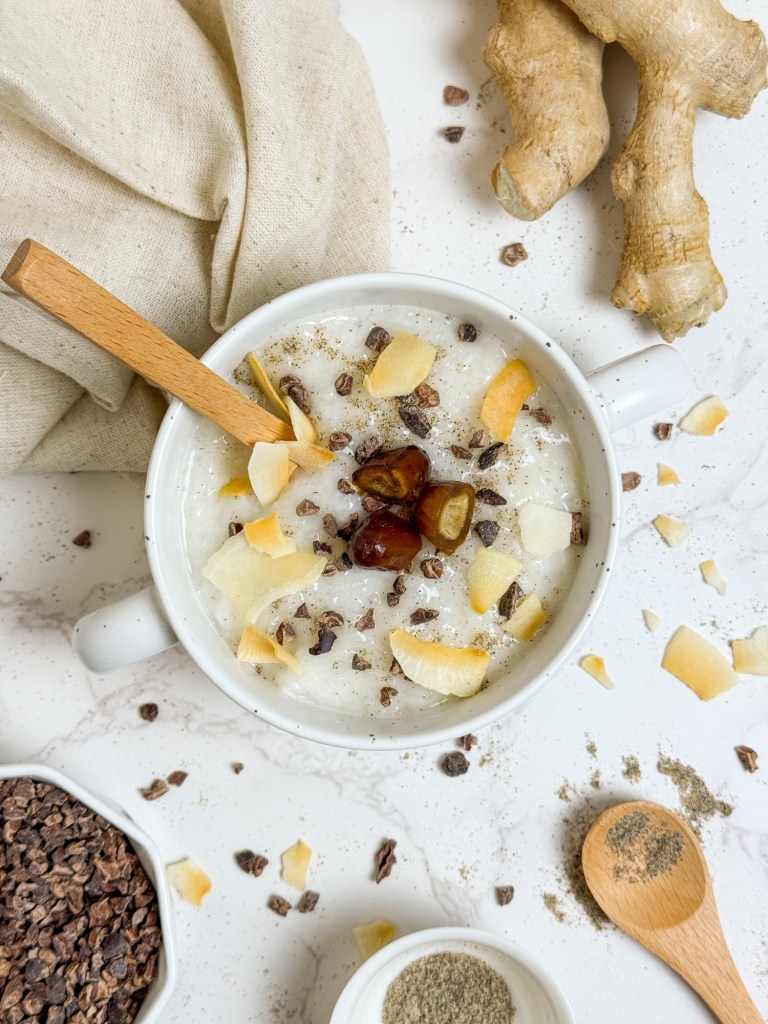
And because it’s naturally dairy-free, gluten-free, and wonderfully simple to prepare, it’s also one of my favorite inclusive Friends-mas potluck desserts. No oven. No special tools. Just a pot, some rice, and a little bit of holiday magic. Perfect when you need something that everyone at the table can enjoy.
This version is inspired by Mexican arroz con leche, but with flavors and textures close to what I grew up eating. Simple ingredients, short cook time, and endlessly customizable toppings make this the kind of dessert you’ll want to keep on rotation all month long.
Why You’ll Love This Recipe
- Coconut-forward + naturally creamy: no dairy needed.
- Quick-cooking: 30 minutes from start to finish.
- Just lightly spiced: cardamom + ginger add warmth without overwhelming.
- Great warm or chilled: enjoy it right away or save it for breakfast.
- Customizable with crunchy, fruity, or chocolatey toppings.
- Naturally gluten-free, using glutinous rice (which contains no gluten despite the name).
Ingredients
Serves: 5–6
Prep Time: 5 minutes
Cook Time: 30 minutes
Base
- 1 cup glutinous rice
- 4 cups unsweetened coconut beverage
- ⅓ cup sugar
- ¼ tsp ground cardamom
- ⅛ tsp ground ginger
Optional Toppings
- Banana chips
- Toasted coconut chips
- Cacao nibs
- Sliced almonds
- Chopped dates
Instructions
- In a lidded pot, bring coconut beverage to a boil.
- Add the glutinous rice, stir, and lower heat to a simmer. Cover and cook for 5 minutes, stirring occasionally.
- Remove the lid, then add sugar, cardamom, and ginger.
- Continue stirring on low to low-medium heat for 10–12 minutes, or until rice is tender and your desired consistency is reached.
- Serve warm or cold with your preferred toppings.
On Rice…
Arroz con leche can take on many personalities depending on the type of rice used. In Mexico, the traditional version is usually made with long-grain rice, which stays light, tender, and softly suspended in the milk. But across different cultures, rice varieties bring their own textures, starch levels, and histories to the bowl.
Here’s a quick look at some common varieties:
Glutinous Rice (Sticky Rice)
- Origins: Southeast and East Asia; widely used in Filipino kakanin (rice cakes) and porridges, Thai sticky rice and other desserts.
- Starch profile: Mostly amylopectin, which makes it naturally sticky and glossy.
- Texture: Thick, creamy, cohesive—grains cling together.
- Despite the name, it contains no gluten.
Long-Grain Rice
- Origins: Grown worldwide, commonly used throughout Latin America, including Mexico.
- Starch profile: Higher amylose, so it cooks up fluffy with distinct grains.
- Texture: Light, loose, and softly tender; the grains hold their shape.
Short-Grain Rice (Arborio, Japanese Rice)
- Origins: Italy and East Asia, typically used to make sushi.
- Starch profile: More amylopectin than long-grain, but less than sticky rice.
- Texture: Soft, creamy, slightly chewy; creates a rich spoonful while still maintaining some structure.
Medium-Grain Rice (Valencia, Calrose)
- Origins: Spain, California, and parts of Asia. Often steamed and eaten alongside main dishes.
- Starch profile: Balanced ratio of amylose to amylopectin.
- Texture: Tender grains that cling lightly together without becoming fully sticky.
Why I Use Glutinous Rice
Growing up, glutinous rice was the base of so many Filipino desserts in our home: sweet, sticky, creamy, and always comforting. So when I make arroz con leche, I naturally reach for the rice that tastes like childhood to me. It creates a softly chewy, cozy texture that feels familiar and nostalgic, even in a dish with Mexican roots.

Feel free to stick to the traditional long-grain rice or try other varieties you find at the market. (There are even red and black glutinous rice varieties!)
Substitutions
- Coconut beverage: Substitute with almond milk, oat milk, or rice milk to keep it vegan.
- Glutinous rice: Short-grain rice also works. Just adjust liquid ratio and cook time.
- Cardamom: Cinnamon is traditional in Mexican arroz con leche; sub ½ tsp or more to taste.
- Ginger: Leave out or sub with a pinch of allspice.
- Sugar: Swap with coconut sugar (deeper flavor), brown sugar (caramelly), or condensed milk (coconut or dairy). Omit added sugar if using condensed milk.
Variations
- Extra Creamy: Add ½ cup canned coconut milk at the end. (Best served warm—coconut milk can separate when chilled.)
- Chocolate Version: Add 2 tbsp cocoa powder + extra 2 tbsp sugar.
- Ube Swirl: Add ¼ cup mashed ube + 1–2 tsp ube extract. Omit cardamom and ginger.
- Fruit-Forward: Top with mango, pineapple, or berries.
- Holiday Spice: Simmer with a cinnamon stick.
- Lelut Balatung: Add toasted mung beans for extra protein, fiber, and vitamin B.
Tips & Tricks
- Stir often! Glutinous rice loves to stick to the bottom and burn.
- Adjust consistency at the end:
- Thicker? Simmer longer.
- Looser? Add a splash of coconut beverage.
- Thicker? Simmer longer.
- Serve it chilled for a naturally thicker, pudding-like texture.
Storage
- Fridge: 2-3 days in an airtight container
- Reheat: Stir in a splash of coconut beverage when warming. It thickens as it chills.
- Freezer: Not recommended (texture becomes grainy).

 Hey It's Jen Lou