(Sweet Potato Tangyuan in Coconut Milk)
Soft, chewy tangyuan filled with banana, gently simmered in creamy coconut milk with tropical fruit and tapioca pearls—this Guinataang Tangyuan is my Filipino-inspired take on a dish traditionally enjoyed during Dongzhi (冬至节), the Winter Solstice Festival.
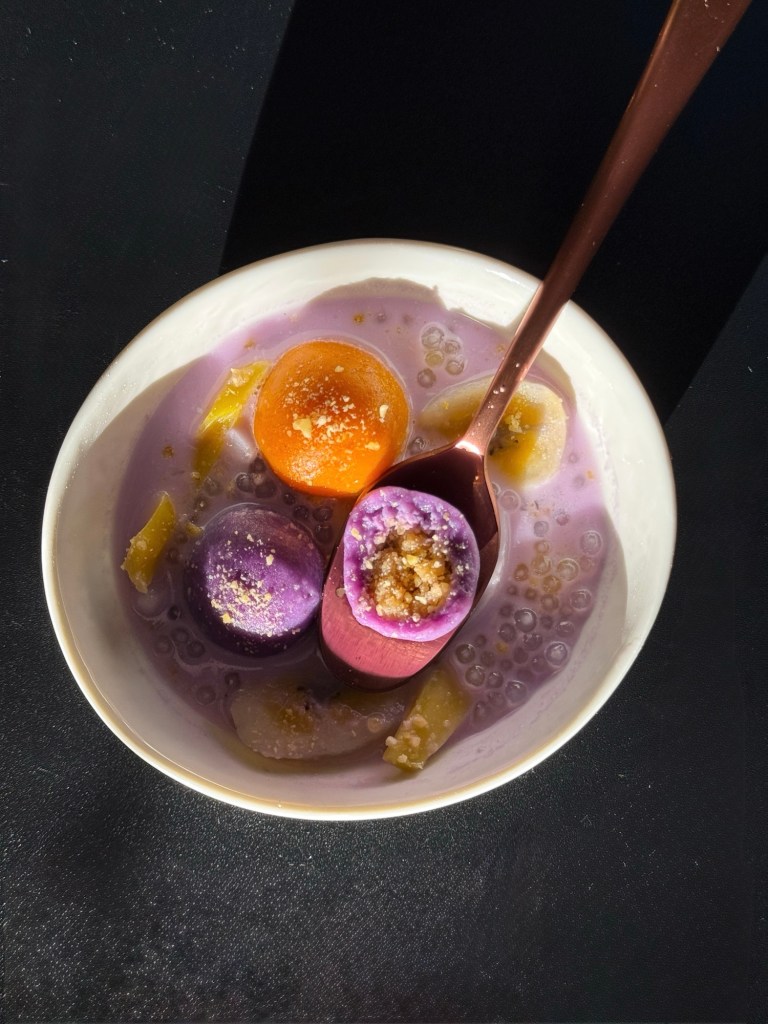
Tangyuan (汤圆) are most commonly eaten around Dongzhi to symbolize wholeness, togetherness, and reunion. Families gather to enjoy warm bowls of these glutinous rice dumplings as a way to mark the turning of the season and the gradual return of longer days. That symbolism: the warmth, comfort, and shared sweetness; feels especially fitting for December.
This version leans into flavors I grew up with: banana, coconut, sweet potato, and ube, echoing the textures of Filipino sweet soups while honoring the spirit of tangyuan. The result is cozy, nostalgic, and deeply comforting. This is the kind of dessert you share with friends and family after platters of dumplings on the longest evening of the year.
Why You’ll Love This Recipe
- Seasonal and symbolic: a meaningful dish to celebrate the Winter Solstice
- Naturally gluten-free and dairy-free
- Soft, chewy textures balanced with creamy coconut milk
- Not overly sweet, letting banana and coconut shine
- Customizable with fillings, fruits, and toppings
- Perfect for December gatherings
What Is Tangyuan?
Tangyuan are glutinous rice dumplings traditionally enjoyed in Chinese culture, most notably during Dongzhi (the Winter Solstice Festival) and the Lantern Festival, which marks the 15th day of the Lunar New Year. They are typically round in shape, symbolizing completeness, unity, and togetherness, and are often served in a lightly sweet broth.
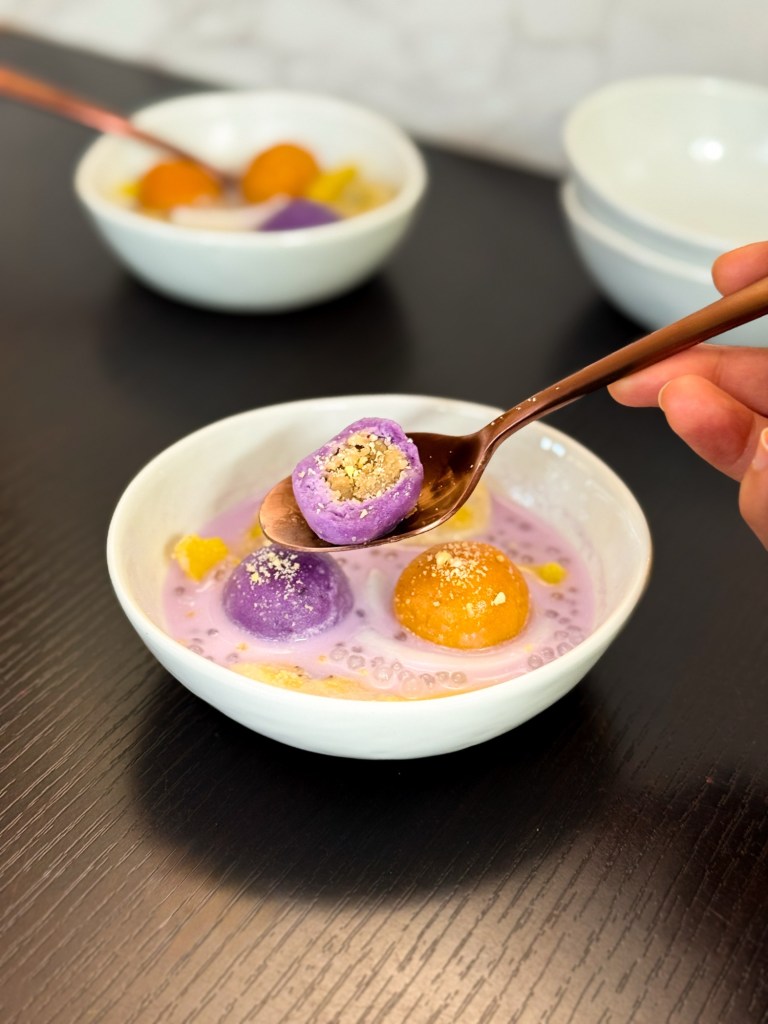
The dough is made from glutinous rice flour, giving tangyuan their signature chewy, mochi-like texture. Fillings range from classic black sesame, peanut, or red bean to modern interpretations using fruits, nuts, or pastes.
Equipment Needed
- Food processor
- Mixing bowls
- Medium pot (for boiling tangyuan)
- Small pot (for cooking tapioca pearls)
- Saucepan (for coconut milk base)
- Slotted spoon
- Knife
- Cutting board
- Oven and aluminum foil (for roasting sweet potato or ube)
Guinataang Tangyuan
Banana Filling
Ingredients
- 65 g banana chips
- 35 g ripe banana
Instructions
- Add banana chips to a food processor and pulverize until finely ground.
- Add banana and continue blending until the mixture resembles a loose dough.
- Roll into marble-sized balls and set aside.
Sweet Potato Tangyuan Dough
Ingredients
- 60 g glutinous rice flour
- 115 g roasted sweet potato or ube, mashed
- 1 tsp water, optional
Instructions
- Combine glutinous rice flour and mashed sweet potato in a bowl.
- Knead until a smooth, pliable dough forms.
- Add water only if needed for flexibility.
- Roll dough into 1-inch balls.
Assemble & Cook the Tangyuan
- Flatten one dough ball into a disc.
- Place a banana filling ball in the center.
- Pinch the dough edges closed, fully encasing the filling.
- Roll gently to smooth.
- Bring a pot of water to a boil.
- Drop tangyuan in gently.
- When they float to the surface (about 3 minutes), remove with a slotted spoon and set aside.
Coconut Milk Base & Add-Ins
Other Ingredients
- Saba or Thai bananas, sliced into chunks
- Canned young coconut, drained and sliced
- Canned jackfruit, drained and sliced
- Mini tapioca pearls, cooked
- Coconut beverage (sweetened or unsweetened, to taste)
To Serve
- Just before serving, warm the coconut beverage in a pot until gently simmering.
- Add bananas, young coconut, jackfruit, and cooked tangyuan.
- Ladle into bowls and top generously with tapioca pearls.
- Serve immediately while warm.
Substitutions
- Banana chips: Dried plantain chips or freeze-dried bananas (adjust quantity as needed)
- Saba bananas: Thai bananas or ripe plantains; regular bananas won’t hold their shape
- Sweet potato:
- Okinawan sweet potato for a vibrant purple
- Beauregard, Jewel, or Garnet for bright orange
- Taro or cassava are also traditional substitutes
- Okinawan sweet potato for a vibrant purple
- Coconut beverage: Canned coconut milk for a richer base; add a drop of ube extract for color and flavor
- Jackfruit: No true substitute, but durian offers a similar texture for adventurous eaters
- Mini tapioca pearls: Boba pearls add chew and visual contrast
Variations
- Classic Bilo-Bilo: Skip the filling and serve plain tangyuan (called bilo-bilo in Filipino cuisine) in coconut milk with bananas, jackfruit, and tapioca for a faster, cozy bowl
- Nutty Filling: Use kinako spread or ground peanuts mixed with honey
- Black Sesame: Swap banana filling for black sesame paste; omit fruits and serve with tapioca pearls
- Extra Tropical: Add a knotted pandan leaf or a drop of pandan extract (discard leaf before serving)
- Ginger-Forward Winter Solstice Bowl: Add fresh ginger slices to the coconut broth while warming, then remove before serving
Tips & Tricks
- Keep unused dough covered with plastic wrap to prevent drying
- If tangyuan crack while shaping, knead in a drop of water
- Don’t overcrowd the pot. Boil in batches
- Tangyuan are best eaten fresh; they firm up as they cool
- Adjust sweetness at the end based on your coconut beverage
Rice flour tip: When shopping for glutinous rice flour, look for packaging with a green label, which indicates sweet (sticky) rice flour rather than regular rice flour.
Perfect Mini Tapioca Pearls (Sago)
Tapioca pearls can be finicky. Too much time and they dissolve; not enough water, they stay chalky; sometimes they even burn the bottom of your pan. This method delivers perfectly clear, chewy pearls every time.
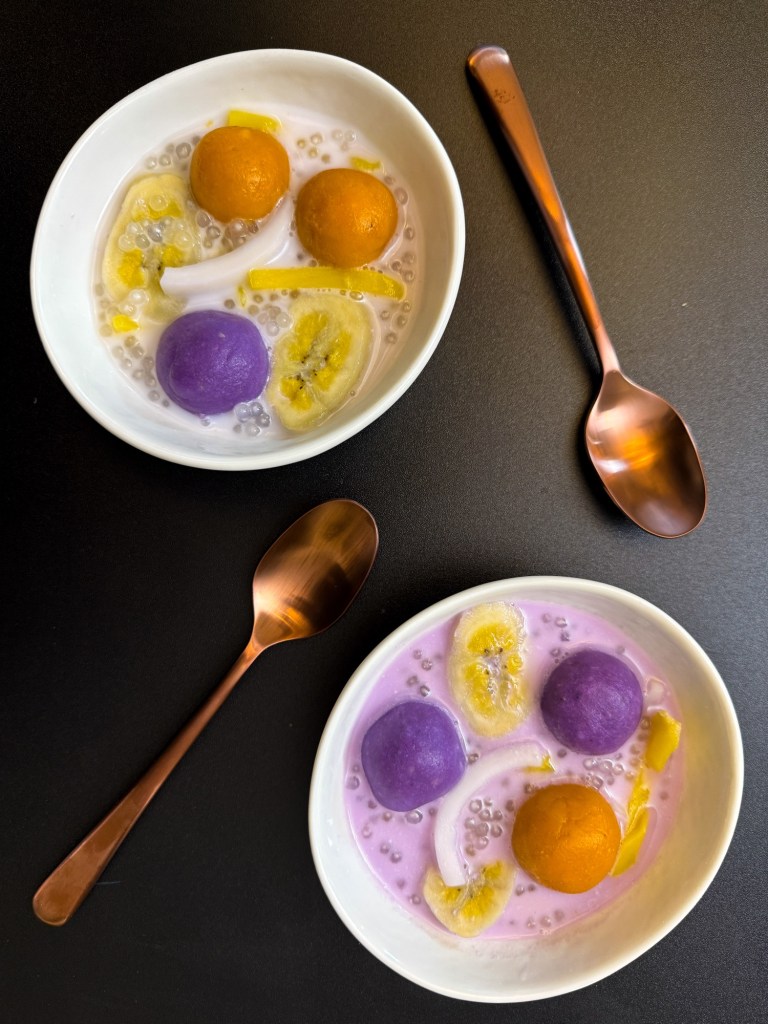
- Bring 2 cups of water to a boil.
- Turn off the heat, add 2 tbsp tapioca pearls, stir, and let sit uncovered for 15 minutes, stirring occasionally.
- Turn heat back on to high and bring to a boil.
- Turn heat off again, stir, and let sit uncovered for another 15 minutes.
- When pearls turn fully translucent, immediately drain excess water.
Storage
- Uncooked tangyuan: Freeze on a tray, then store up to 1 month
- Cooked tangyuan: Best enjoyed immediately
- Coconut milk base: Refrigerate up to 2 days; reheat gently
More Tangyuan, Reimagined
If you’d like to explore more fusion tangyuan recipes with Mexican-forward flavors, check out these favorites from the blog:
Each one takes the familiar comfort of tangyuan and pairs it with unexpected flavors, showing just how versatile these little dumplings can be across cultures.

 Hey It's Jen Lou